The debate that the country’s primary school syllabus does not cater for the needs of children with disabilities continues to rage.
The syllabus, as others have argued, puts emphasis on abstract concepts and rigid assessment standards, thereby creating a hostile learning environment for students who require tailored support.
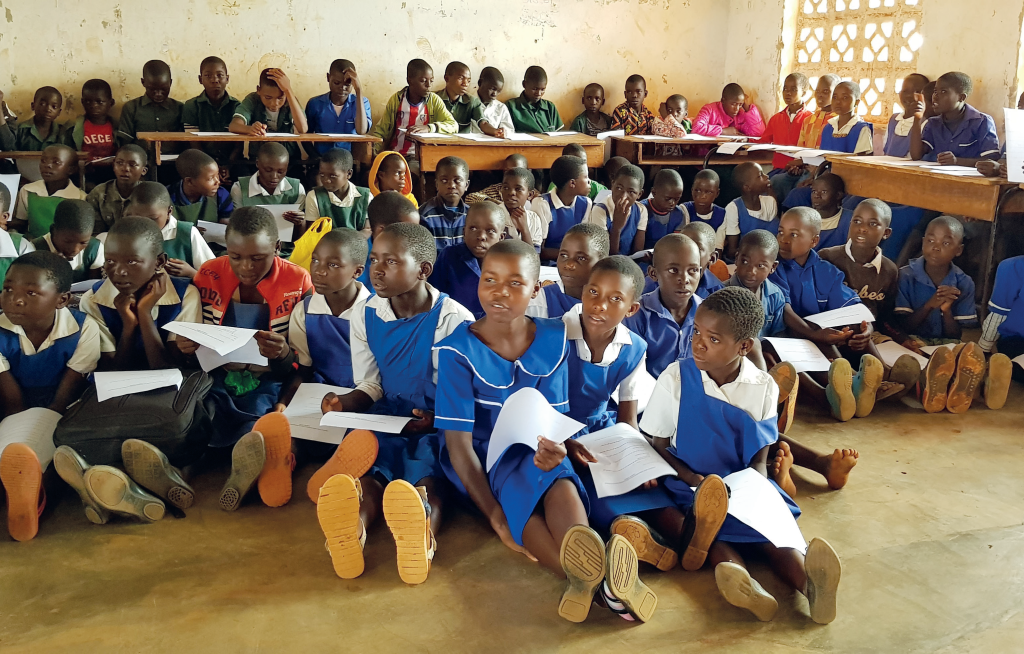
For learners with visual impairments, for instnace, the emphasis on written texts and visual aides can be a significant barrier.
Similarly, those with hearing impairments often struggle to keep pace with lessons reliant on auditory instruction.
Malawi’s primary school syllabus’ inflexibility is particularly problematic for children with disabilities who often require customised learning approaches.
Christopher Sambo, a special needs teacher at Naotcha Primary School in Blantyre Rural admits that the formal syllabus excludes the needs of learners with learning difficulties. He believes that learning materials should be specific to every child’s needs to achieve inclusivity.
“We teach pupils who have low developmental conditions and they cannot comprehend information like normal students. This affects quality education delivery,” he says.
Hellen Mashalubu, a 14-year-old Standard Seven learner at Naotcha Primary School, was born with cerebral palsy. Her teacher says it is difficult to use the learning material her classmates use because her mind is like that of a person half her age.
According to Malawi Council for Disability Affairs (Macoda) spokesperson Harriet Kachimanga, the lack of an inclusive syllabus leaves children with disabilities with no option but to drop out of school.
She says: “Lack of tailored learning materials hinders these children from their right to education, which eventually perpetuates dependency and abuse.”
To create a truly inclusive education system, Malawi’s primary school syllabus must undergo a radical transformation. This requires a shift from a ‘one-size-fits-all’ approach to a flexible, child-centred framework that acknowledges and values diversity.
By incorporating universal design principles, providing accommodations and modifications, and training teachers in inclusive pedagogy, Malawi can ensure that all children, regardless of their abilities, have access to a quality education.
Only then can the country unlock the full potential of its children, empowering them to become active citizens and contributors to Malawi’s development.